
Why have a bridge?
- Avoid shifting and alignment issues in your existing natural teeth
- Boost your confidence when speaking and smiling
- Protect your gums from irritation or damage
- Fixed and durable restorative option
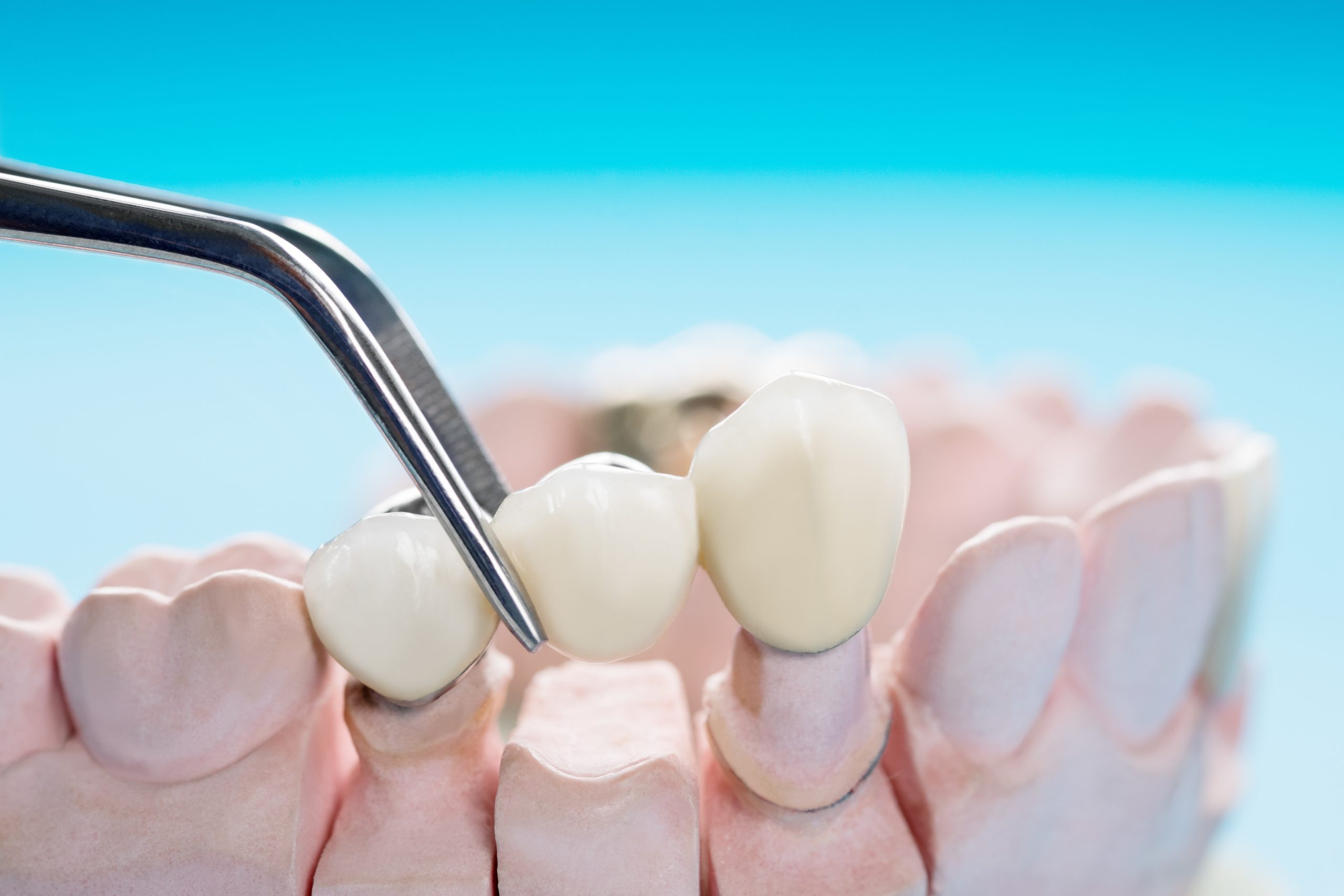
We begin by assessing the supporting teeth to ensure they are healthy and strong, carefully preparing them by removing a thin layer of enamel so the bridge can fit accurately.
We take impressions of the prepared teeth, which are sent to the dental laboratory so your bridge can be made to your exact specifications. We fit a temporary bridge to protect your teeth in the meantime.
Once your final bridge arrives, we check the fit and appearance, making any minor adjustments needed before bonding it securely in place with durable dental cement.
Get in touch
Clean your bridge daily to prevent plaque buildup, bad breath, and gum disease. It is also important to clean under the false tooth every day. Your dentist or hygienist will show you how to use specialised interdental brushes or floss, as a standard toothbrush won’t be able to reach.
With good oral hygiene and routine dental check-ups, a well-maintained bridge can easily last over ten years. Keeping the supporting natural teeth healthy is essential for maintaining a strong foundation.
The main alternatives to bridges for replacing missing teeth are partial dentures and dental implants. Bridges offer a more secure, fixed option compared to removable dentures, while implants provide maximum durability without relying on adjacent teeth for support.
The fitting procedure is completely painless as your dentist numbs the supporting teeth and surrounding gums with local anaesthetic. You may experience mild sensitivity to hot or cold for a few days after your teeth are prepared, but this quickly subsides.
It is usually best to wait a few weeks or months after an extraction to allow your gums and jawbone to heal and settle fully. Your dentist may place a temporary bridge in the interim so you are never left with a visible gap.